IndustryPrecision machining
Connected dataWork orders, shop-floor results, next tasks, process progress, and delivery status
Measured result70% faster shop-floor to office communication and 98% on-time delivery
Implementation
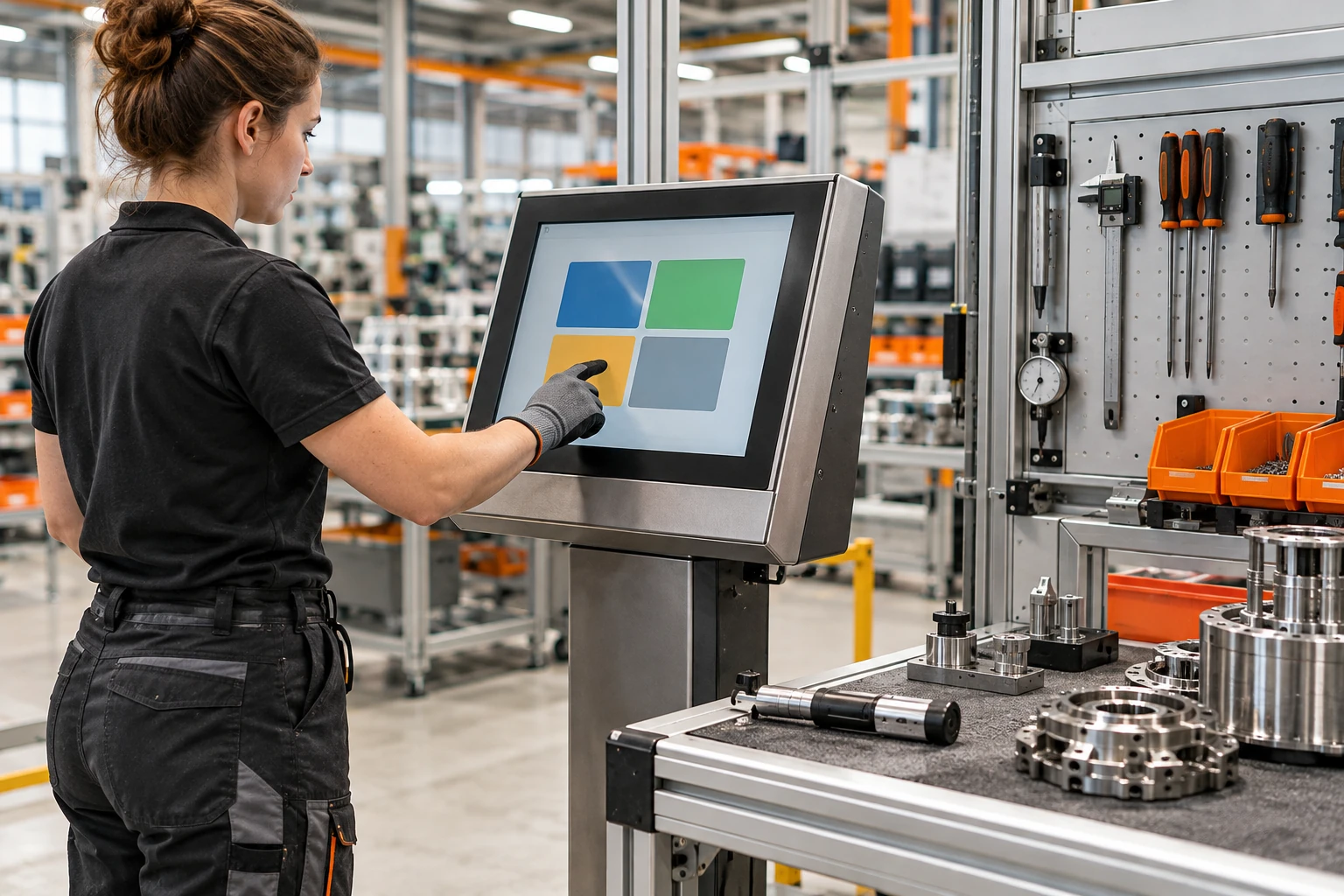
Operator kiosk screens that reduced movement and duplicate entry were connected to a real-time management dashboard.
Outcome
With operators checking results and next tasks directly on the kiosk and managers watching the same data on a live dashboard, the time spent going back and forth between the floor and the office fell 70% and on-time delivery reached 98%.
70% faster shop-floor to office communication and 98% on-time delivery
Validation method
Communication time and on-time delivery records were compared for measured periods before and after implementation.
Terms used in this case study
Definitions follow the IYULAB manufacturing glossary.
- Work Order A work order is the execution unit that tells the floor what to make, how many, and under what conditions. It is the anchor that production results and quality history attach to.
- MES A Manufacturing Execution System (MES) records and manages how a work order is actually carried out on the shop floor, in real time. It closes the gap between what was planned and what happened.
- OEE Overall Equipment Effectiveness (OEE) expresses how much of its planned time a machine actually delivered, as a single ratio combining availability, performance and quality.
Related implementation guides
Step-by-step articles on the same topics.
- Shop-floor entrypeople actually use Systems that go live and then go unused are common. The cause is design, not willingness. When entry increases and nothing comes back, no system holds.
- Phased rollout:choosing phase one Advice to go in phases is common; what phase one should be is not. Three criteria apply: the effect must be visible, the data must be easy to obtain, and failure must not stop production.